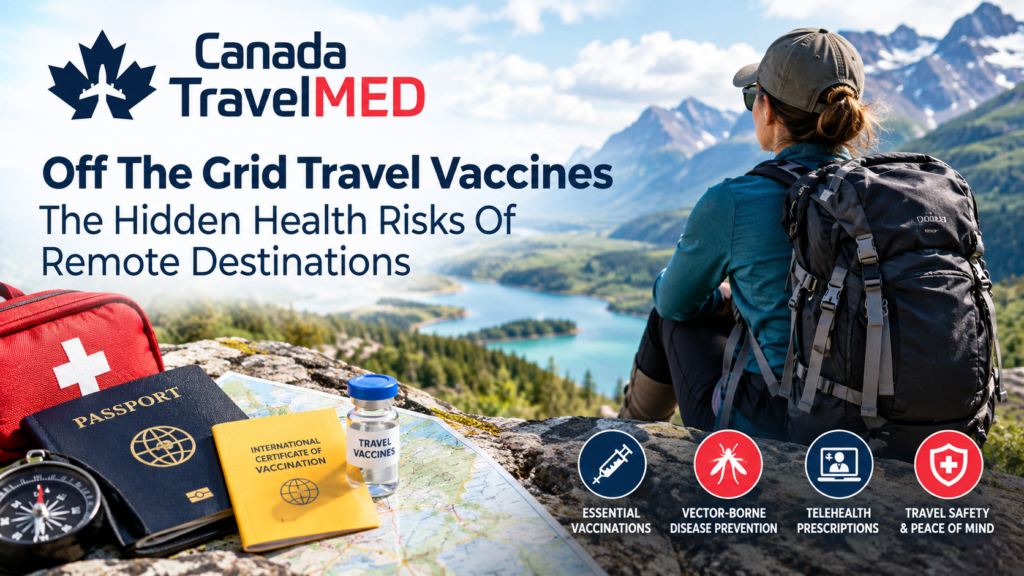
Escaping over-touristed European summer hotspots sounds like the ultimate adventure until you are three days from the nearest hospital and facing a medical emergency. Canadians are increasingly trading crowded resorts for rural Central Asia, deep South America, and remote African reserves to find authentic experiences. Leaving robust medical infrastructure behind drastically increases your exposure to vector-borne and zoonotic diseases that typical resort vacationers never have to face.
Key Takeaways
- Venturing into rural territories requires advanced immunization planning for severe diseases like Japanese Encephalitis and Rabies.
- Pre-exposure rabies vaccination is a critical lifeline because emergency immunoglobulin is rarely available in remote overseas clinics.
- Modern telehealth platforms allow Canadians to secure specialized travel medicine prescriptions from anywhere without visiting physical clinics.
- Early preparation and destination-specific prophylaxis mitigate the extreme health risks associated with off-the-beaten-path itineraries.
What Are The Real Dangers Of Remote Travel?
The primary danger of remote travel is the sudden lack of robust medical infrastructure, significantly increasing your risk of untreated vector-borne and zoonotic diseases. When you step off the grid, you also step away from reliable pharmacies, fully stocked emergency rooms, and rapid medical evacuation routes.
Travelers often underestimate how quickly a minor incident turns into a life-threatening situation in rural environments. Whether you are navigating local guidelines in Brantford before your trip or trekking through the high altitudes of the Andes, preparation is absolutely non-negotiable. Diseases transmitted by mosquitoes, ticks, and mammals thrive in the very agricultural and wild areas that adventure seekers love most. Unlike urban centers where advanced post-exposure treatments are readily available, remote regions completely lack the specialized biologics required to neutralize these immediate threats. You can easily explore our comprehensive service options to understand exactly what prophylactic measures your specific rural itinerary demands.
Understanding The Japanese Encephalitis Risk In Rural Asia
Japanese Encephalitis is a viral brain infection transmitted by mosquitoes, primarily posing a severe threat to travelers visiting rural agricultural areas and flooded rice paddies in Asia. The transmission risk amplifies exponentially during the evening and night when vector mosquitoes are most active.
For anyone booking extended trips to Central and Southeast Asia, understanding this environmental risk is paramount. The virus is highly endemic in these specific regions, and while local populations might benefit from natural immunity or national vaccination programs, unvaccinated travelers remain highly vulnerable. The Canadian Immunization Guide highlights that the absolute benefit of the vaccine is highest for those traveling for long periods or taking multiple trips through these rural agricultural zones. Securing the vaccine before departure ensures you are protected from a devastating disease that has zero specific antiviral treatments available globally.
The Pre-Exposure Rabies Protocol Explained
The pre-exposure rabies protocol involves a series of vaccine doses administered before travel, designed to simplify emergency treatment and completely eliminate the need for hard-to-find rabies immunoglobulin. This protocol is absolutely essential for anyone traveling to areas where the disease is endemic and modern medical care is scarce.
If you are bitten by a feral dog, monkey, or bat in a remote location, the standard post-exposure treatment requires the immediate administration of rabies immunoglobulin directly into the wound. The terrifying reality for off-the-grid travelers is that this life-saving biologic is frequently out of stock, improperly stored, or completely unavailable in developing rural areas. By completing the pre-exposure series before leaving your home base in Hamilton, you buy yourself crucial time and peace of mind. If exposed, you will only require basic booster doses rather than the full, highly complex post-exposure regimen.
The Reality Of Sourcing Medical Care Abroad
Sourcing specialized medical care in remote destinations is a massive logistical challenge that often requires coordinating expensive medical evacuations just to obtain basic vaccines. Rural clinics typically only stock basic antibiotics and standard first aid supplies, leaving them completely unequipped to handle complex viral exposures.
When planning an extended stay in deep South America or rural Central Asia, you must assume that local healthcare facilities will not have what you need. Backpackers often find themselves forced to charter expensive emergency flights back to capital cities simply because a local village clinic does not carry the rabies vaccine or antimalarial medication. This incredible delay in treatment can be fatal when dealing with time-sensitive infections. Understanding this stark reality reinforces why preventative medicine is the only viable strategy for adventurous Canadians.
Why Emergency Immunoglobulin Is A Logistical Nightmare
Rabies immunoglobulin is a highly sensitive blood product that requires strict temperature control and is incredibly expensive to manufacture, making it exceptionally rare in remote clinics. Developing nations often reserve their limited supplies solely for severe local emergencies, leaving foreign travelers without immediate access.
Relying on the hope that you can find this product after an animal bite is a massive gamble. The logistics of cold-chain storage mean that even if a rural pharmacy claims to have it, the efficacy of the biologic might be compromised due to frequent regional power outages. Pre-travel vaccination entirely circumvents this massive logistical nightmare, putting the power of survival back into your own hands.
How Telehealth Simplifies Rural Travel Planning
Telehealth streamlines travel medicine by allowing patients to consult with experts remotely, receive customized itinerary risk assessments, and have specialized prescriptions sent directly to their local pharmacy. This modern approach adheres strictly to Canadian Virtual Care Policy guidelines by providing the exact same quality of care virtually as you would receive in person.
Historically, preparing for a complex international journey meant scheduling multiple in-person clinic visits, taking time off work, and waiting in crowded waiting rooms. Now, a resident in Oakville can easily discuss their remote African reserve plans with a specialist entirely online. The physician assesses the unique geographic risks of the destination, prescribes the necessary vaccines, and digitally routes all the paperwork to a nearby local pharmacy. This incredibly efficient process eliminates geographic barriers, ensuring that even those living outside major medical hubs have direct, seamless access to life-saving prophylactic care.
Comparing Rabies Exposure Treatments
Understanding the fundamental difference between being vaccinated before your trip versus relying entirely on emergency care abroad is critical for your survival.
| Feature | Pre-Exposure Prophylaxis Completed | No Prior Vaccination |
| Initial Treatment Required | 2 standard booster vaccine doses | 4 to 5 intensive vaccine doses |
| Rabies Immunoglobulin Needed? | Absolutely not | Yes, immediately injected into the wound |
| Availability of Treatment | Boosters are widely available globally | Immunoglobulin is extremely rare remotely |
| Time Sensitivity | Gives you extended time to reach a clinic safely | Requires immediate, urgent medical intervention |
| Overall Stress Level | Highly manageable | Extremely high emergency situation |
Steps To Prepare For Off The Grid Travel
Thorough preparation is the only way to safely navigate non-viral destinations without putting your life at risk. Follow this exact timeline to ensure complete medical readiness before you depart.
- Map Your Exact Route: Document every single rural area, national park, and remote village you plan to visit, as environmental risks change drastically outside main city limits.
- Book A Virtual Consultation: Schedule an appointment with a specialized travel medicine physician at least six weeks before your departure to discuss your specific itinerary.
- Assess Zoonotic Risks: Identify whether your daily activities involve close contact with local wildlife, necessitating the pre-exposure rabies immunization protocol.
- Evaluate Vector Threats: Determine if your route includes rice paddies or agricultural zones that definitively require the Japanese Encephalitis series.
- Fulfill Prescriptions Locally: Have your specialized doctor route the prescriptions to a pharmacy in Burlington or your home city for highly convenient pickup.
- Pack A Comprehensive Medical Kit: Include all prescribed oral medications, advanced first aid supplies, and specialized antidiarrheal treatments.
- Verify Evacuation Insurance: Ensure your travel insurance policy explicitly covers emergency medical air evacuation from deep remote territories.
Frequently Asked Questions
Why is the Japanese Encephalitis vaccine necessary for rural travel?
The Japanese Encephalitis vaccine provides critical immunity against a severe mosquito-borne viral brain infection that is highly prevalent in rural Asian agricultural areas. Because there is absolutely no cure or specific antiviral treatment for the disease once contracted, robust prevention through vaccination is the only effective strategy for travelers spending significant time in endemic zones.
How does the pre-exposure rabies vaccine protect me?
Pre-exposure vaccination aggressively primes your immune system to fight the rabies virus, significantly simplifying the medical treatment required if you are ever bitten by a potentially infected animal. It totally eliminates the urgent need for rabies immunoglobulin, a scarce biologic that is rarely found in rural clinics, and drastically reduces the total number of post-exposure booster shots required to save your life.
Can I get complex travel vaccines through a telehealth appointment?
Yes, you can receive comprehensive travel health assessments and secure prescriptions for complex vaccines like those for Rabies and Japanese Encephalitis through highly secure telehealth platforms. The prescribing physician will digitally send the required official paperwork directly to your local pharmacy in Toronto or Brampton for immediate, hassle-free fulfillment.
When should I schedule my travel medicine consultation?
You must schedule your initial travel consultation a minimum of six to eight weeks prior to your intended departure date. This vital window allows adequate time to complete multi-dose vaccine series, such as the Rabies or Japanese Encephalitis protocols, ensuring your immune system has fully developed the necessary protective antibodies before you travel.
Securing Your Health Before You Go
Traveling totally off the grid offers unparalleled life experiences, but it demands an incredibly advanced level of personal health preparation. Relying on the blind hope that rural clinics will somehow carry highly specialized emergency treatments is a incredibly dangerous gamble. By taking proactive steps to understand vector-borne risks and securing all necessary immunizations, you transform a potentially disastrous medical emergency into a highly manageable inconvenience.
We are completely committed to ensuring all Canadians can explore the most remote corners of the globe safely and confidently. Our advanced telehealth platform delivers expert, destination-specific medical advice and seamless prescription routing directly to your neighborhood pharmacy. Before you pack your bags for the ultimate rural adventure, book your consultation today to build a comprehensive, highly personalized immunization strategy.