If you’re planning an international trip, the headlines about Ebola can certainly be alarming. It’s natural to feel concerned when you hear about outbreaks, especially in popular transit hubs. At Canada TravelMED, we believe the best way to manage travel anxiety is through knowledge and proactive, personalized preparation. While the risk of Ebola to the general traveller remains very low, understanding the facts is your first line of defence in staying healthy while abroad.
This guide will help you understand how Ebola is transmitted, what precautions you can take to protect yourself, and why a comprehensive, preventative health plan is your most valuable travel companion. It’s not just about vaccines; it’s about understanding your environment and knowing how to navigate it safely.
Planning an Upcoming Trip Abroad?
Get destination-specific health guidance, vaccine prescriptions, and travel advice from our licensed healthcare team—all online with Canada TravelMED.
Book Your Consultation100% Virtual Consultation Available • Accepted Across Canada
Key Takeaways
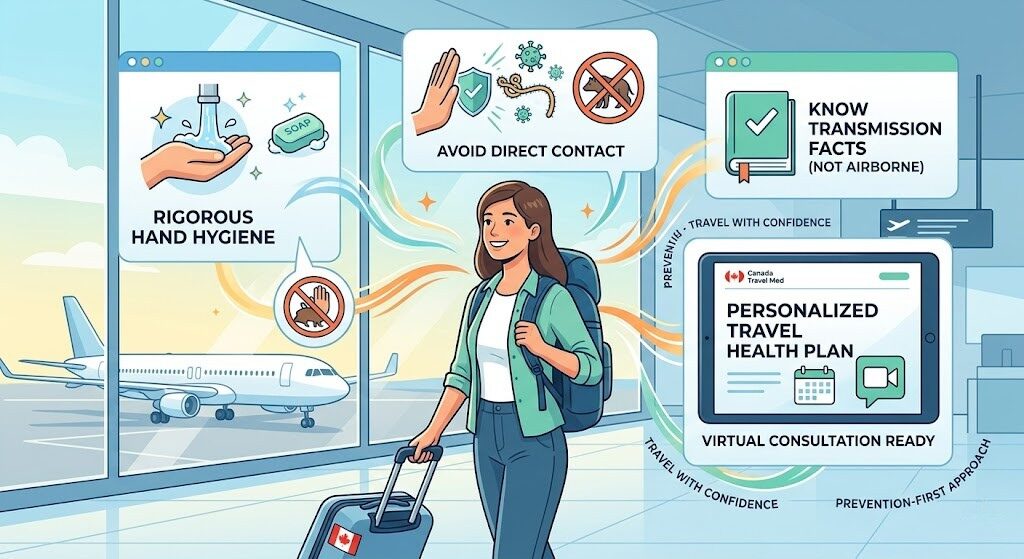
- Ebola is not airborne: It does not spread through casual contact, water, or mosquito bites.
- Direct contact is key: Transmission occurs through direct contact with the body fluids of an infected person or animal.
- Prevention is proactive: Frequent hand hygiene, avoiding high-risk areas, and following local health guidance are your primary defences.
- Personalized planning matters: A pre-trip consultation helps you assess your specific risks based on your destination and itinerary.
- Know when to seek help: If you have been exposed or develop symptoms, early medical intervention is critical for both your survival and community safety.
Understanding Ebola Transmission
Ebola is a serious, often deadly viral disease, but it is not easily caught. It is important to dispel common myths: you cannot get Ebola from sitting in the same room as someone, from water, or from insects.
Transmission happens primarily through direct contact with:
- Body fluids (blood, saliva, sweat, vomit, feces, etc.) of a person who is sick with or has died from Ebola.
- Contaminated objects, such as medical equipment, bedding, or clothing that has come into contact with those fluids.
- Infected animals (live or dead), such as fruit bats, monkeys, or apes, or consuming their raw meat.
Because transmission is so specific, your risk as a traveller is extremely low unless you are providing direct care to a patient or engaging in high-risk activities in an outbreak-affected area.
Proactive Safety Measures for Travellers
Whether you are heading to Vancouver, Calgary, Winnipeg, Halifax, or St. John’s, your health preparation starts long before you reach the airport. When travelling to regions where infectious diseases are a concern, follow these practical steps to stay safe:
1. Practice Rigorous Hygiene
Hand washing is one of the most effective ways to prevent the spread of many infections, including viral and bacterial illnesses. Use soap and water frequently or an alcohol-based hand sanitizer. Avoid touching your eyes, nose, or mouth, especially when you are out and about.
2. Avoid High-Risk Environments
If you are traveling to an area with a known outbreak, stay informed. Avoid visiting health facilities where patients are being treated unless absolutely necessary and follow all instructions from local authorities. Keep a safe distance from anyone showing symptoms of illness.
3. Be Mindful of What You Touch and Eat
Avoid contact with wild animals, both live and dead. Do not handle or consume “bushmeat” (raw or undercooked meat from wild animals). Furthermore, avoid direct, unprotected contact with the body fluids of anyone who is ill, and refrain from participating in local burial rituals that involve handling the deceased.
Why a Personalized Travel Health Plan is Essential
Many travellers think travel health begins and ends with a vaccine. At Canada TravelMED, we take a much broader view. A preventative health plan is a comprehensive strategy tailored to your specific trip.
If you are travelling to a region with potential health risks, we help you:
- Assess your specific risk level: We look at your itinerary and activities to determine exactly what precautions you need.
- Prepare for the unexpected: We provide guidance on how to identify local health resources and when to contact a professional.
- Bridge the gap: Our affordable virtual consultation allows us to build your plan from the comfort of your home, and we can even send prescriptions directly to your local pharmacy.
Prevention is always better than a prescription. By having a clear plan in place, you move from a state of worry to a state of confident preparation.
Conclusion
While the news of an Ebola outbreak can feel overwhelming, your risk as a traveller is manageable through smart, informed decisions and proactive planning. Focus on what you can control: your hygiene, your activities, and your level of preparation.
Don’t leave your health to chance, especially if you have a big trip or wedding on the horizon. Book a virtual consultation today to get your personalized health plan started and travel with the peace of mind you deserve.