
Understanding Hepatitis A and How It Spreads
Hepatitis A is a highly infectious virus that targets the liver, causing inflammation and illness. It spreads primarily through the fecal-oral route – meaning you can contract it by ingesting food or water contaminated with microscopic traces of feces from an infected person. In practical terms, this often happens via unclean water, ice, raw or under-cooked foods, or from an infected individual handling food without proper hygiene. You won’t get hepatitis A from casual contact like talking or a handshake, but you can catch it from contaminated meals or poor handwashing practices.
One tricky aspect of hepatitis A is that symptoms take a while to appear – usually 2 to 6 weeks after exposure. During this incubation period, an infected person might feel fine but can still shed the virus and infect others. (In fact, people are most contagious in the week or two before they show symptoms.) When illness does strike, it often starts with vague symptoms like fatigue, nausea, stomach pain, and fever, followed by jaundice (yellowing of the skin/eyes) in many cases. The disease is usually self-limiting and doesn’t cause chronic liver problems – most people recover within about two months. However, the severity of infection increases with age: young children who get hepatitis A often have no symptoms at all, whereas teens and adults can get quite sick. In rare cases, it can even lead to acute liver failure, especially in older adults or those with other liver conditions.
The good news for Canadians at home is that hepatitis A is fairly rare domestically – largely thanks to clean water and good sanitation infrastructure. Hepatitis A incidence is very low in developed countries like Canada, so the average Canadian doesn’t typically encounter this virus in daily life. But travel can change that: once you venture to parts of the world where sanitation isn’t as reliable, the risk of hepatitis A increases significantly. In fact, hepatitis A is one of the most common vaccine-preventable illnesses acquired by travellers. This means Canadian travellers need to be informed and prepared, even if hepatitis A isn’t something they worry about at home.
Where the Risk Lies for Canadian Travellers
Global hepatitis A endemicity map (darker shades indicate regions where people tend to be exposed at younger ages, reflecting higher transmission). Canadians traveling to the darker and medium-shaded regions – which include most of Africa, Asia, Central and South America, and the Middle East – face a higher risk of encountering the hepatitis A virus than they do at home.
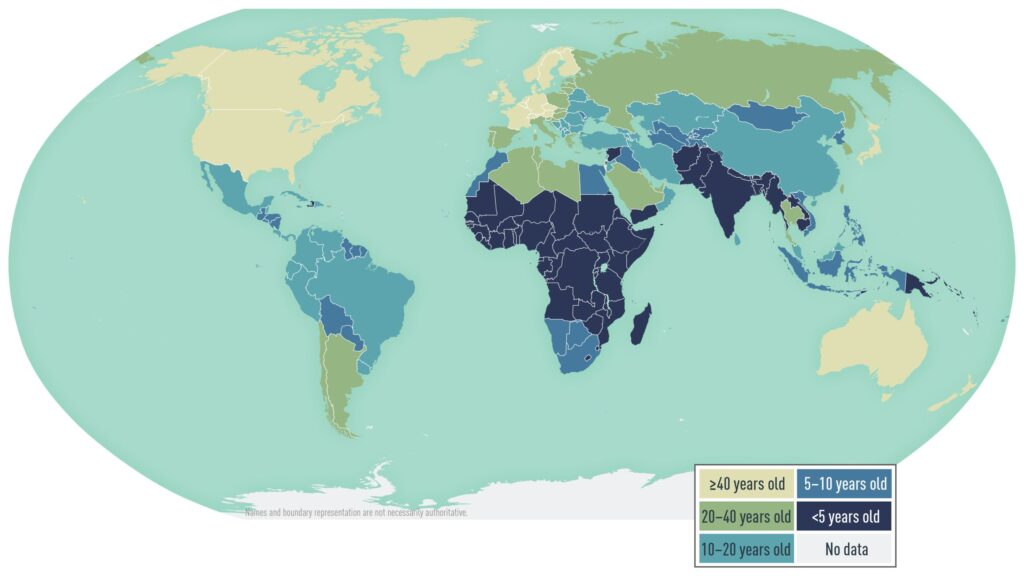
For Canadian travellers, the geography of risk is an important factor. Hepatitis A exists worldwide, but countries are categorized by how common the virus is (often described in terms of high, intermediate, or low endemicity). Generally, the risk is highest in developing regions where clean water and proper sewage disposal can be inconsistent. This includes large parts of Central and South America, Mexico, Africa, the Middle East, and Asia – places many Canadians love to explore. These regions have a combination of climate and infrastructure conditions that allow hepatitis A (and other stomach bugs) to spread more easily. Intermediate risk areas include parts of Eastern Europe and some Caribbean nations. Even popular tourist destinations like the Dominican Republic or Thailand, for example, have enough hepatitis A circulation that travellers are routinely advised to get vaccinated. By contrast, the risk is lowest in countries with high levels of sanitation and hygiene – for example, Northern/Western Europe, Japan, Australia, New Zealand, the United States, and Canada itself are all low-risk for hepatitis A transmission. If you never left Canada, your chances of contracting hepatitis A would be extremely slim.
However, travellers shouldn’t interpret “low risk” regions as “no risk.” Hepatitis A can still crop up in unexpected places or circumstances. Contaminated food products can cause outbreaks even in countries with good infrastructure. (For instance, in 2022 an outbreak in Canada was traced to imported organic strawberries, and in recent years frozen fruit and shellfish have sparked hepatitis A cases in the U.S. and Europe.) Moreover, even in five-star resorts or on cruise ships, if a food handler or a single ingredient is contaminated, travellers can be exposed. It is possible to get infected with hepatitis A even when staying in high-end accommodations – what matters more is the local virus circulation and hygiene standards, not the hotel stars. The CDC emphasizes that travel-related hepatitis A has occurred in travelers with standard tourist itineraries in both developing and developed countries. In short, no destination is 100% risk-free if hepatitis A virus finds its way into the food or water chain.
That said, certain travel scenarios do boost your risk. Adventure travelers who venture into rural areas, backpack in remote regions, or eat street food at local markets have a higher chance of encountering contaminated food or water. Similarly, travelers who are visiting friends and relatives (VFR) in their family’s home country may be at particular risk. Why? Often they stay in local homes and eat home-prepared foods, which is wonderful culturally but might expose them to local water or produce that carry the virus. There’s also an immunity gap to consider: if parents grew up in a country where most people catch hepatitis A in childhood, the parents may be immune (having had the infection as kids without realizing). Their Canadian-born children, however, have no such immunity and could easily catch the virus when visiting family abroad. Studies in Ontario have noted that people returning to endemic countries to visit family are more likely to get hepatitis A, especially if they aren’t vaccinated. So if you’re a Canadian with roots in, say, South Asia, and you’re taking your kids to experience your hometown, be mindful that your family could be at risk despite staying with relatives – the local virus exposure that you shrugged off as a child could make your unvaccinated children (or you, if you never had it) quite ill.
Key takeaway: Canadian travellers face the highest hepatitis A risk in places where the virus is still common in the environment. That includes much of Asia, Africa, Latin America and parts of Eastern Europe – but even “safe” destinations can have surprise contaminations. The farther off the beaten path you go and the more local your experience (which can be the best part of travel!), the more you should think about hepatitis A protection. Don’t assume that sticking to bottled water or staying in a nice resort is a guarantee – smart precautions and vaccination are your best defenses.
Who Should Get Vaccinated and When
Because hepatitis A is so easily prevented by a vaccine, most travellers outside Canada’s borders should strongly consider getting vaccinated. In fact, Canada’s public health authorities note that hepatitis A is one of the most common preventable infections in travellers, and they recommend the vaccine for anyone 6 months of age or older who is at increased risk – notably, travellers to areas with intermediate or high hepatitis A rates. In simpler terms, if you’re a Canadian planning to travel virtually anywhere outside of Northern/Western Europe, Australia/New Zealand or the U.S., a hepatitis A shot is advised unless you know you’re already immune. This applies to all ages: the vaccine can be given as early as 6 months old, so even infants traveling to visit family abroad or go on a tropical vacation should get immunized. (If your child is under 6 months old, they’re too young for the vaccine – discuss extra precautions with a travel doctor.) Conversely, there is no upper age limit; older travellers and seniors benefit from the vaccine as well. In fact, since adults tend to get sicker from hepatitis A than kids, it’s especially important for older travellers (and those with chronic illnesses) to protect themselves.
So, who exactly should get the hepatitis A vaccine? Here’s a quick checklist:
- All travellers to developing countries or regions with moderate to high risk (which, as discussed, includes most destinations in Asia, Africa, the Middle East, Central and South America, and some parts of Eastern Europe) should be vaccinated. This is basically standard travel health advice now.
- Travellers with underlying health conditions should be immunized as a priority. Hepatitis A can hit harder if you have chronic liver disease (such as hepatitis B or C, or cirrhosis) or other chronic illnesses. Likewise, if you have a weakened immune system, you want to avoid any additional infection, so the vaccine is a sensible precaution.
- Families traveling with young children – definitely get the kids vaccinated (if they’re old enough) because kids can catch and spread the virus easily, often without showing symptoms. Also, the vaccine is safe for children, and preventing illness in your kids also protects everyone around them.
- Anyone who simply wants to avoid getting sick on vacation can get the vaccine. You do not need to be in a high-risk group – hepatitis A vaccine is available to any traveller who wants that extra peace of mind. In fact, “all persons who wish to decrease their risk… should be vaccinated,” according to Canadian health guidelines. The vaccine is very effective (more than 90% protective after the recommended doses) and has a long safety record, so many travel health professionals say “why not?” even for low-risk itineraries.
Timing: To make the most of the vaccine, you need to plan a bit ahead of your trip. Hepatitis A vaccination is given as a series of two shots (more on that in the next section), and the first dose needs some time to stimulate your immune system. It’s recommended to visit a travel health clinic or your doctor around 6 to 8 weeks before you travel. This window gives enough time to get the initial shot and – if your schedule allows – the second shot before departure. Even if you can’t fit both doses in before you leave, getting that first dose early means you’ll have significant protection by the time you’re on the plane. The hepatitis A vaccine starts working fairly quickly; in fact, about two weeks after the first shot, the vast majority of people have protective levels of antibodies.
What if you don’t have 6–8 weeks before travel? Get the vaccine as soon as possible anyway. Even a last-minute appointment a few days before you go is worthwhile. Travel clinics often see people heading out on short notice and can still administer the first dose of hepatitis A vaccine right up to departure day. While you might not be maximally protected in the first days of your trip, some protection is better than none – and the vaccine will continue to build immunity during your travels. (If you were to be exposed very early in your trip, there’s also a treatment called immune globulin that a doctor might use in special cases, but that’s beyond the scope of this article. The bottom line: don’t skip the vaccine just because you’re late – go for it.)
In summary, nearly any Canadian traveler headed to a region with less-than-Canadian sanitation should get vaccinated against hepatitis A. The ideal time is about 1–2 months before travel, but it’s never too late to start. And remember, this isn’t just about protecting yourself – by not bringing hepatitis A home, you’re protecting your family and community in Canada too. A quick consult with your healthcare provider ahead of your trip will give you personalized advice (for instance, confirming what shots you need based on exactly where you’re going and what you’ll be doing).
Hepatitis A in 2025: What’s New and What to Watch
As of 2025, hepatitis A remains a relevant concern for travellers, even though it’s an old disease with a reliable vaccine. One of the biggest changes in recent years was the COVID-19 pandemic, which inadvertently led to a drop in travel-related hepatitis A cases (simply because international travel plummeted in 2020–2021). In Ontario, for example, health officials observed a significant decrease in reported hepatitis A cases during the pandemic years, attributing it to reduced travel and thus fewer travel-acquired infections. Now that global travel has rebounded to near-normal levels, public health experts caution that travel-related illnesses like hepatitis A are also likely to tick back up. In short, the lull is over – if you’re traveling in 2025 and beyond, don’t be complacent. We’re back to a world where a tropical vacation or a gap-year backpacking trip can once again expose you to diseases that are rare in Canada, including hep A.
Another notable development is that some regions are experiencing hepatitis A outbreaks in their local populations, which travelers should be aware of. For instance, early in 2025 Los Angeles County (USA) declared a community-wide hepatitis A outbreak after seeing a surge in cases. In 2024, LA had 165 reported cases – triple the number from the previous year – and what stood out was that many of the 2025 cases were not in the usual high-risk groups (like homeless populations or drug users) but in the general community. This indicates that the virus was spreading more widely, possibly through contaminated food or person-to-person transmission in the community. Health officials responded by urging everyone to get vaccinated and to practice good hand hygiene (especially in food service settings). For Canadian travellers, the takeaway from this is twofold: (1) Hepatitis A can pop up even in wealthy cities – so the virus is never really “gone” – and (2) vaccination is seen as the key intervention when outbreaks occur. If you’re protected, you can largely shrug off news of an outbreak, whereas unvaccinated people might have to line up for emergency shots if they think they were exposed.
In the realm of food-borne outbreaks, as mentioned, Canada and the U.S. have faced several hepatitis A incidents linked to imported produce in recent years. We talked about the 2022 strawberry-linked outbreak; there was also an outbreak in 2021 from frozen mangoes in Canada. These incidents are a reminder that hepatitis A surveillance is ongoing and that global food supply chains can sometimes spread the virus. By 2025, food safety measures have been tightened in many countries (for example, better screening and quality control for frozen fruits), but as a traveller, you should still keep an eye on any travel health notices. The Government of Canada’s travel health website lists advisories – it’s worth checking if there’s any hepatitis A advisory for your destination (such as a known outbreak or concern). For example, if a popular tourist island had a hepatitis A outbreak in local restaurants, an advisory might recommend all travelers there get vaccinated. Thus far in 2025, there haven’t been major travel-specific hepatitis A advisories for particular countries, but this can always change.
On the vaccine front, what’s new is mostly an accumulation of evidence that the vaccines work very well and protect for a long time. Scientific follow-ups have confirmed that people who got two doses decades ago are still immune many years later. Experts now project that immunity from the full series likely lasts at least 25 years, and possibly for life in many cases. This has eased concerns about needing booster shots later on. In fact, the WHO updated its position on hepatitis A vaccines in 2022, noting the long-term effectiveness of both one-dose and two-dose regimens in various studies. (Some countries have experimented with single-dose campaigns to immunize their population; those have shown good short-medium term results, though Canada still uses the two-dose schedule for maximum protection.) Another update is that more countries have incorporated hepatitis A vaccine into their routine childhood immunization programs, especially in regions with intermediate risk. For example, the United States has been vaccinating all children against hep A since the mid-2000s, which significantly reduced their case counts nationally. A number of Latin American countries and some Asian countries have also started vaccinating kids in the last decade. This gradual increase in global vaccination might lead to fewer hepatitis A cases long-term, but paradoxically it can also shift the average age of infection upward (fewer kids getting it, more adults remaining susceptible) which makes outbreaks still possible. The key point for Canadian travellers: don’t assume that a country’s development level or vaccination policy eliminates the need for your own precautions. Even if a country has reduced hepatitis A rates, there can still be enough virus in circulation to pose a risk to an unvaccinated tourist.
Lastly, it’s worth noting the emphasis public health authorities place on pre-travel consultation and personalized advice. By 2025, travel medicine has become fairly accessible across Canada – there are travel clinics in most big cities and plenty of online resources. Taking advantage of those is more important than ever, given the constantly evolving landscape of outbreaks and health recommendations. A doctor can give you up-to-the-minute advice on hepatitis A and other shots, tailored to your itinerary (for example, if you’re backpacking in rural areas for months versus a week at an all-inclusive resort, the advice might differ in nuance). They will also remind you of the basics – like the need for vaccination – and ensure you’re aware of any other 2025-specific concerns (be it COVID-related rules, malaria prophylaxis, etc., depending on where you go). So, as a rule of thumb, plan a visit to a travel health provider ~6 weeks before your trip and make hepatitis A a point of discussion. It’s a quick item that can make a huge difference.