Planning a trip is exciting, but whether you are heading to a rustic cabin in the Rockies or preparing for an international adventure, the stress of “what if I get sick?” can linger. This is especially true when you hear about rare but serious risks like Hantavirus. You might be wondering if you need a vaccine or if a basic first-aid kit is enough to keep you safe.
At Canada TravelMED, we believe that your health plan should be more than just a list of prescriptions. It is a full preventative system designed to keep you out of the hospital so you can enjoy your trip. This article will help you understand what Hantavirus is, how to recognize the risks, and most importantly, how to build a personalized plan to prevent infection before it ever starts.
Planning an Upcoming Trip Abroad?
Get destination-specific health guidance, vaccine prescriptions, and travel advice from our licensed healthcare team—all online with Canada TravelMED.
Book Your Consultation100% Virtual Consultation Available • Accepted Across Canada
Key Takeaways
- Hantavirus is primarily spread through contact with infected rodent droppings, urine, and saliva (WHO, 2026).
- In North America, the Deer Mouse is the primary carrier of the virus (Hastings Prince Edward Public Health, n.d.).
- Early symptoms often mimic the flu, including fever, fatigue, and muscle aches (CDC, 2024).
- There is currently no vaccine for Hantavirus, making prevention your most powerful tool (Canada.ca, n.d.).
- Virtual consultations can help you assess the specific risks of your destination and activities.
What is Hantavirus and Why Does Prevention Matter?
Hantavirus refers to a family of viruses mainly spread by rodents. While rare, it can lead to severe and life-threatening conditions like Hantavirus Pulmonary Syndrome (HPS). Because there are no specific antiviral treatments or vaccines available (Canada.ca, n.d.), the “Prevention, Not Just a Prescription” philosophy is vital.
While health insurance is there to help if you end up in a hospital, our goal at Canada TravelMED is to ensure you never need that hospital bed in the first place. By understanding the environment of your destination—whether it involves rural hiking, staying in seasonal cabins, or visiting agricultural areas—we can provide the specific guidance needed to avoid exposure.
How Hantavirus is Spread
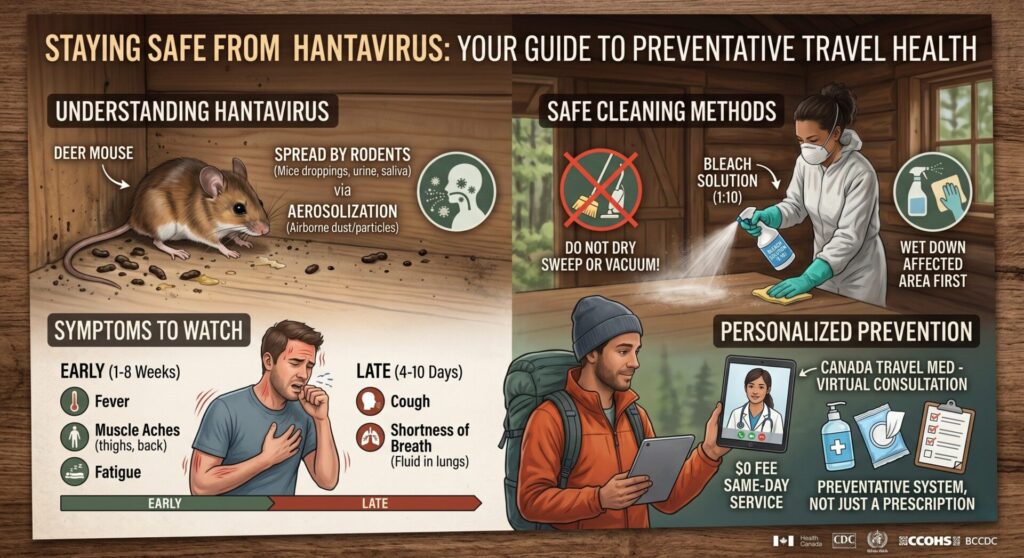
The most common way humans contract the virus is through aerosolization. When rodent waste is disturbed—for example, by sweeping out a dusty shed or cabin—virus particles can become airborne and be inhaled (BC Centre for Disease Control, n.d.).
- Inhalation: Breathing in dust contaminated with rodent urine or droppings.
- Direct Contact: Touching contaminated materials and then touching your nose or mouth.
- Bites: Although rare, a bite from an infected rodent can transmit the virus (WHO, 2026).
Recognizing the Risks for Canadian Travellers
Whether you are staying close to home in Brantford or Hamilton, or heading to a remote international location, the risk level depends heavily on your activities. Hantavirus is not just a “wilderness” issue; it can be found in any area where rodents thrive.
Common Exposure Sites
- Seasonal Cabins and Cottages: Buildings that have been closed up for the winter are prime spots for rodent nesting (CCOHS, n.d.).
- Rural Construction Sites: Disturbing old structures can kick up contaminated dust.
- Camping and Hiking: Sleeping on the ground or using infested trail shelters increases your risk.
- Agriculture and Farming: Frequent contact with barns and hay storage areas (WHO, 2026).
If you are planning a trip to a rural area, we recommend consulting the Government of Canada’s travel health notices to stay updated on any recent outbreaks or high-risk zones.
Symptoms to Watch For: Is it Just the Flu?
The challenge with Hantavirus is that the early signs are very similar to a common flu or cold (CDC, 2024). This is why a personalized health plan—which includes knowing what symptoms to look for based on your exposure risk—is so important.
- Early Symptoms (1–8 weeks after exposure): Fatigue, fever, and muscle aches, especially in the large muscle groups like the thighs, hips, and back (CDC, 2024).
- Late Symptoms (4–10 days after the initial phase): Coughing and shortness of breath as the lungs begin to fill with fluid (CDC, 2024).
For patients with underlying conditions like diabetes or heart disease, these symptoms can progress rapidly. Our team provides specialized advice for at-risk groups, ensuring your plan accounts for your specific medical history.
The Canada TravelMED Advantage: Personalized Prevention
Most people think a travel clinic is just a place to get a “poke in the arm.” At Canada TravelMED we offer a comprehensive system. We look at where you are going, your previous health history, and what you’ll be doing to create a plan that covers everything from food safety and parasites to virus prevention.
Why Choose a Virtual Consultation?
- Affordable Consultation Fee: We offer our expert consultations and all follow-ups at an affordable rate. We believe expert advice should be accessible to every Canadian.
- Convenience: Our consultations are entirely virtual. You can meet with an expert from your home in Toronto, Brampton, or Mississauga.
- Same-Day Service: We can often complete your consultation, create your plan, and send prescriptions to your local pharmacy on the same day.
- In-Trip Support: If you start feeling unwell while away, you can contact us virtually or use SnapMED video services for immediate peace of mind.
Expert Tip: If you must clean a space where rodents may have been, never dry sweep or vacuum. Instead, use a bleach solution to wet down the area for at least 5 minutes before cleaning to prevent the virus from becoming airborne (Canada.ca, n.d.; CCOHS, n.d.).
Conclusion: Planning for Peace of Mind
Hantavirus is a serious reminder that travel health is about more than just vaccines. It is about awareness, preparation, and having a proactive system in place. Whether you are planning a long-awaited wedding in a rural setting or a last-minute getaway, a personalized health plan is your best defence against the unexpected.
Don’t leave your health to chance. By focusing on prevention today, you can ensure your trip is remembered for the sights and experiences, not a trip to the emergency room.
Book your virtual travel health consultation today to start your personalized preventative plan.
References
BC Centre for Disease Control. (n.d.). Hantavirus Pulmonary Syndrome (HPS).
Canada.ca. (n.d.). Prevention of a hantavirus infection.
CDC. (2024). About Hantavirus.
Hastings Prince Edward Public Health. (n.d.). Hantavirus Pulmonary Syndrome FAQs.